Where company knowledge is actually spoken
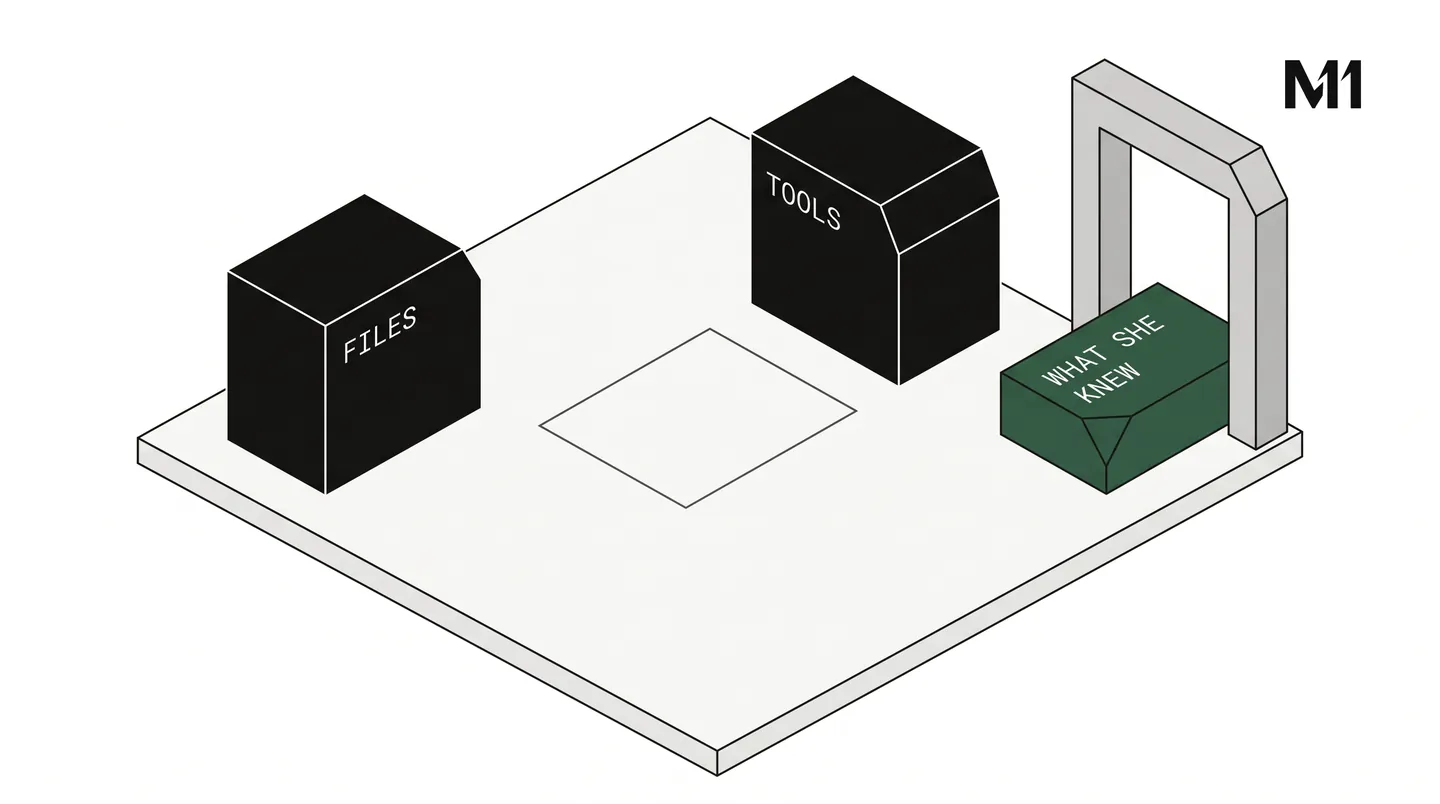
If you want to know how a company really works, the documentation is the wrong place to look. Look at the conversations. The leadership meeting on Monday. The department head talking to sales. The buyer on the phone with a supplier. The marketing lead on a call with the agency.
That is where the real problems come up, where goals get adjusted, where somebody says we should really do this. In many American companies it is already normal to record and transcribe all of it. In most of the European SMEs I see, it is still the exception. The knowledge is spoken, and then it evaporates.
- Meetings at the table, in the office
- Calls between an employee and a supplier
- Calls between marketing and an external agency
- Department heads talking to sales or production
Why a summary is not enough
A leadership meeting does not follow a script. It starts with marketing, jumps to a delivery problem, goes to sales, comes back to marketing. A generic summariser does its best and hands back a tidy list: five points, three action items.
The list looks helpful and hides the important part. The summariser does not know the company. It cannot tell a decision from a wish. It does not know that this topic has already come up three weeks in a row, or that the person who said they would handle it has said the same thing twice before.
One meeting is manageable for a human. A hundred meetings are not. That is exactly where it gets interesting.
From transcripts to signals
The useful unit is smaller than a summary. I call it a Company Signal. A signal is one thing that was said, classified: this is a problem, this is a goal, this is a decision, this is an open question. And for each one, three checks. Is there a deadline? Is there an owner? Was anything actually decided?
Every signal keeps its date and the meeting it came from. That matters, because it means every answer later can point back to its source instead of asking you to trust it.
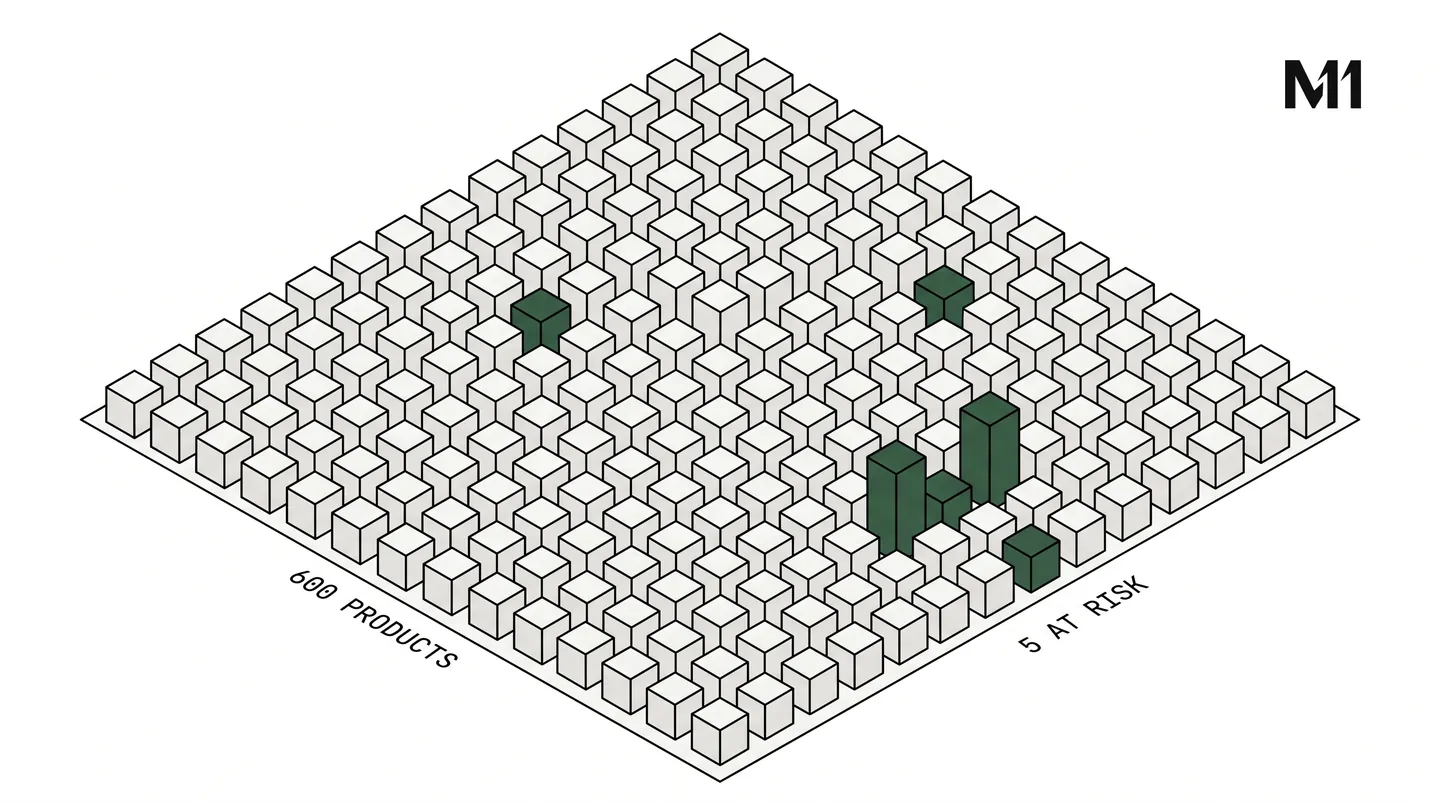
Run that over fifty or a hundred meetings and you get something no summary gives you: a table of everything the company discussed that has no deadline, no owner and no decision. It is usually longer than people expect.
- Problem: something is not working
- Goal: something the company wants to reach
- Decision: something was agreed
- Open decision: discussed, but nobody said yes or no
- Missing deadline, missing owner
An open decision is not a task
This is a distinction I find important. In meetings, a lot of things get said in the form of it would be good if we had this for social media. Nobody writes a task. There is no time in the meeting to work it out, so it drifts. It comes back next week, and the week after.
Turning that into a task would be wrong, because nobody decided to do it. It is an open decision. It belongs in front of the department it concerns, with one simple question: is this relevant, yes or no? If yes, it gets an owner and a date. If no, it is closed and stops coming back.
"I am on it"
Here is a pattern I have seen many times. In a meeting, a department says it is on it. A week later, it says it is done. It is not done. Nobody is lying on purpose. People are busy, and memory is generous.
Now the managing director asks one question in a chat that can read the meeting history: was this discussed, and did we set a deadline? The answer comes back with sources. Raised on 21 May. Confirmed as in progress on 28 May. Mentioned again the following week as still open. No deadline was ever set.
That is a complete chain of facts, in thirty seconds, without asking anyone. The value is not watching an employee. It is that the company can finally see what it already said, and have a calm conversation about it instead of an argument about who remembers what.
Questions a CEO can suddenly ask
Once the signals exist, the questions change. They stop being about a single meeting and start being about the company.
- Which decisions from the last month have no deadline?
- Which topics keep coming back without being resolved?
- What is still open in my sales department?
- Where do two departments talk about the same problem without knowing it?
- Which goals were mentioned but never given an owner?
Moving upwards
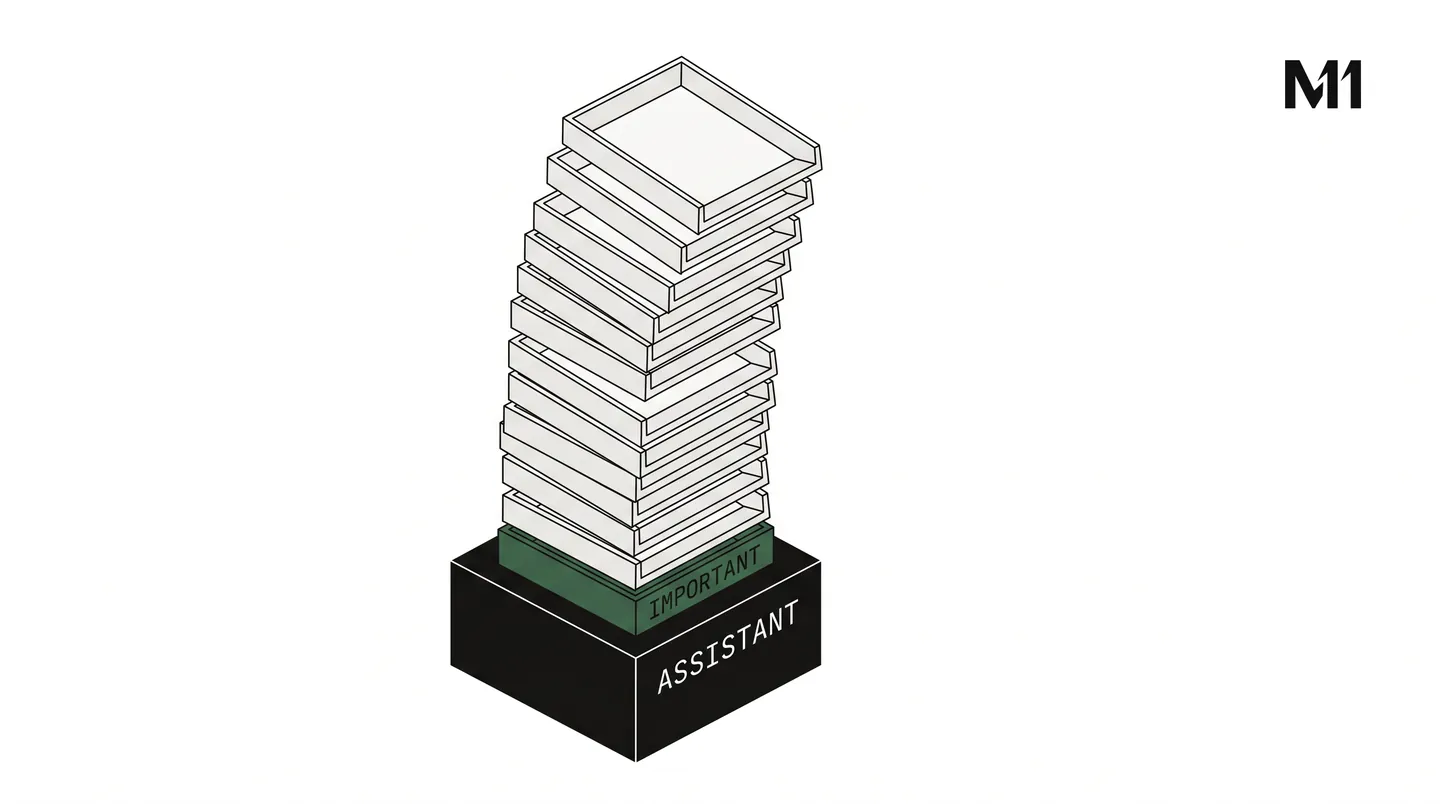
A signal is not an instruction. Somebody still has to look at it and decide where it belongs. I think of it as moving upwards through layers. At the bottom are the transcripts. Above them, the signals. Above those, the places where a signal can land: an update to a process description, a change to a goal, or a decision that management has to take.
Some signals get thrown away, and that is fine. The human stays in the loop exactly at the point where judgement is needed. Over a month, this small loop does something a summary never does. The same problems stop coming back unannounced, because they now have an owner and a date.
Where the leverage comes from
Meeting notes on their own show you the open loops. Connect them to one process chain and the chat can say which of those loops matters for that process. Add one more source, the CRM, the ad account or the stock levels, and it can start answering why something happened and what the next move is.
I would not connect all of that on day one. Start with ten meeting notes from one department and one main process. Look at what comes out. Only then pick the single data source with the biggest effect. That way the context grows step by step, without a migration project nobody wants.
What this is not
It is not surveillance, and it should never be sold as such. It is not an AI that learns your customers. It is company knowledge that was already spoken, structured so that the right people can find it, with rights that decide who sees what.
Before any of this runs, a company needs clear rules on recording, consent and access. And the honest measure of success is simple: fewer open decisions without an owner and a deadline. Not a promise that AI will run the company.